

Compliance That Fits SAP ECC Users
How SAP ECC Processes Bulgaria E-Invoices
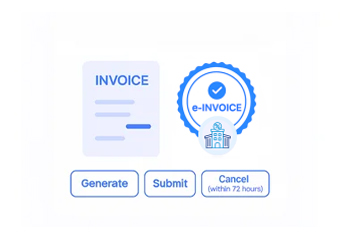
- Source Data Collection: Relevant sales, billing, customer, material, and accounting records are gathered directly from SAP ECC.
- Information Validation: Collected information undergoes detailed checks covering required fields, tax attributes, references, and transaction consistency.
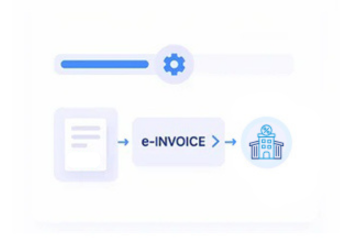
- Invoice Content Assembly: Approved SAP ECC information is arranged into electronic invoice content for Bulgarian invoicing processes.
- Transaction Reference Preservation: Generated invoice records retain references to billing documents, deliveries, customers, materials, and relevant SAP ECC transactions.
- Document Transmission Handling: Prepared documents follow supported electronic invoicing channels while preserving relevant enterprise transaction context throughout.
- Outcome Recordkeeping: Processing outcomes are recorded alongside source information, supporting reconciliation, review, reporting, and exception handling.
What Advintek Adds to SAP ECC
Advintek extends SAP ECC by organizing enterprise billing information for Bulgarian e-invoicing, helping finance teams manage customer, material, tax, delivery, and accounting data through connected digital processes.
- Validates SAP ECC billing details before invoice preparation
- Organizes enterprise invoice fields for electronic processing
- Links source documents with generated invoice records
- Supports finance review across connected workflows
Practical SAP ECC Invoicing Benefits
- Billing Process Alignment: Links SAP ECC billing activity with e-invoices while preserving sales and commercial transaction context.
- Business Partner Accuracy: Uses customer master details alongside billing records to maintain consistent business partner identification throughout invoicing.
- Delivery Verification: Relates delivery information to billing documents, helping teams verify fulfilled transactions against resulting invoice records.
- Material Data Organization: Organizes material details and pricing information for accurate electronic invoice preparation from SAP ECC transactions.
- Tax Detail Alignment: Aligns VAT information with applicable billing activity before invoices enter supported electronic processing stages.
- Financial Record Visibility: Relates invoice records to financial postings, giving accounting teams stronger visibility during reconciliation and reporting.
SAP ECC Integration Capabilities for Bulgaria
Billing Scenario Mapping
Connects billing types with invoice scenarios for consistent handling across different SAP ECC transactions.
Company Code Referencing
Maps company codes and organizational references into invoice records for clearer enterprise-level financial context.
Sales Area Association
Links sales areas with originating transactions to support appropriate document handling across SAP ECC operations.
SAP ECC Workflows for Bulgaria Invoicing
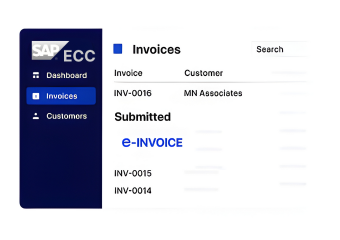
SAP ECC supports integrated sales, billing, procurement, materials, customer, and financial operations, while Advintek aligns relevant enterprise transactions with Bulgaria-focused electronic invoicing workflows.
- Connects SAP ECC billing with e-invoices
- Aligns company codes with invoice records
- Relates materials to commercial transactions
- Supports accounting review and reconciliation
SAP ECC and Advintek — Integrated for Accuracy.
Start structured Bulgaria e-invoicing across your SAP ECC environment.
Connect enterprise records with compliant invoice processes.
Ready e-Invoice System
Frequently Asked Questions SAP ECC E-Invoicing Bulgaria
What SAP ECC information can Advintek use for Bulgaria e-invoicing?
Advintek can use relevant SAP ECC sales, billing, customer, material, tax, and accounting information to prepare electronic invoices for applicable Bulgaria processes. The integration layer helps validate invoice data, preserve source-document references, and coordinate processing without requiring finance teams to recreate information manually outside their established SAP ECC environment.
Which SAP ECC master and transaction records support invoices?
Depending on the configured workflow, relevant SAP ECC information may include billing documents, customer master records, material details, sales documents, deliveries, VAT information, and accounting references. Advintek can organize applicable fields for electronic invoice preparation while retaining relationships with the underlying ERP transactions used by finance and operations teams.
How does SAP ECC billing information reach Advintek?
When a billing document is created in SAP ECC, related transaction information can be passed into the connected e-invoicing workflow. Advintek can retain references to the originating billing record and relevant sales or delivery information, allowing users to trace electronic invoice data back to the enterprise transaction that generated the commercial activity.
In what ways can Advintek complement SAP ECC finance processes?
Advintek can complement SAP ECC finance processes by relating e-invoice records to relevant customer billing and accounting information. This gives finance teams a clearer view of invoice status, source transactions, tax information, and processing results when performing reconciliation, reporting, or document-level reviews and related accounting activities.
Can SAP ECC support Bulgaria public-sector electronic invoicing?
For applicable Bulgaria public-sector transactions, SAP ECC can supply the underlying commercial, customer, billing, tax, and financial information. Advintek can process that information through the required electronic invoicing workflow, while businesses remain responsible for applying the specific requirements relevant to each public-sector transaction and recipient.